Advancing Virology and
AI-Driven Discovery
Engineering the ViraVac™ platform and intelligent phytochemicals
Integrating Virology, Immunology, & Computational Biology
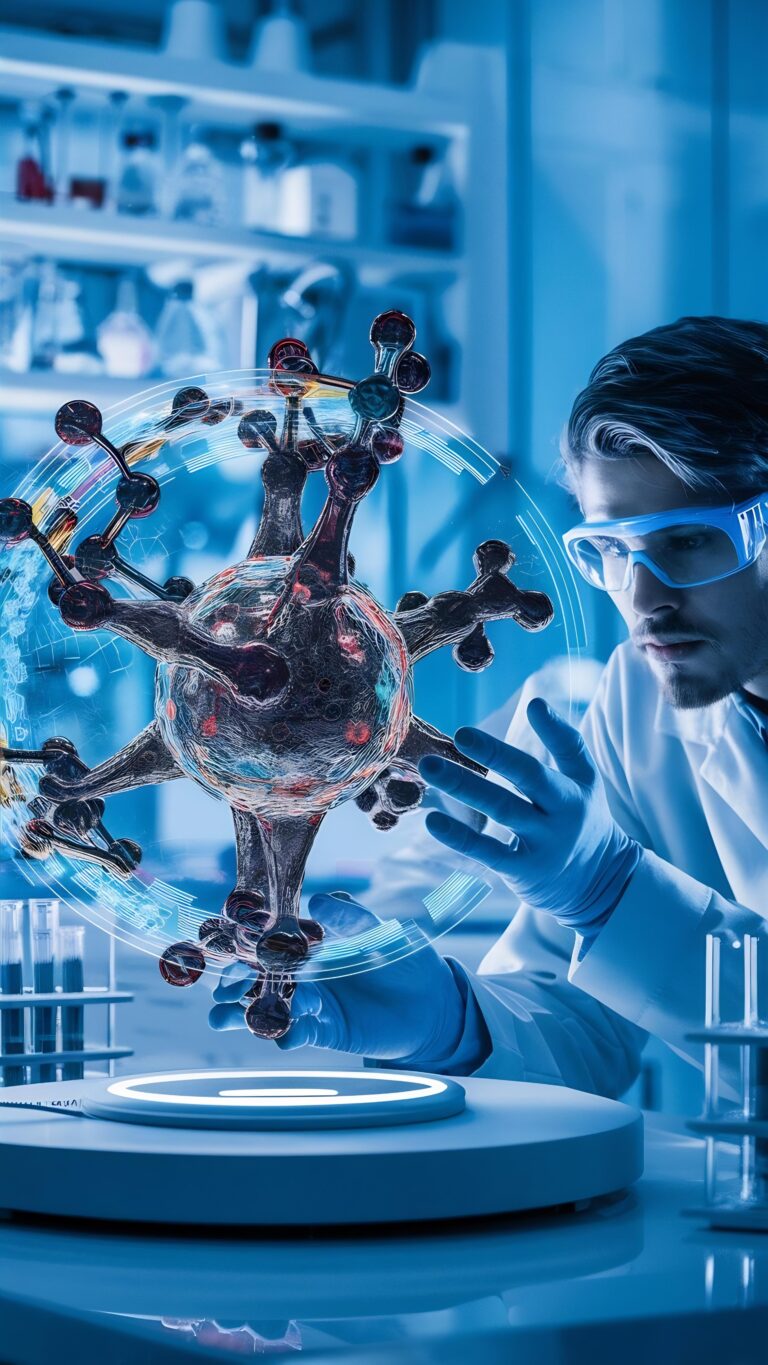
IBG harnesses the power of the patented ViraVac™ HSV-1 vector and AI-driven discovery to engineer superior safety, efficacy, and manufacturing scalability in immunotherapeutics.
We strive to address some
of the biggest challenges in microbiology today
VIRAVAC™ (VC2) VECTOR
The Foundation of Our Vaccine Pipeline
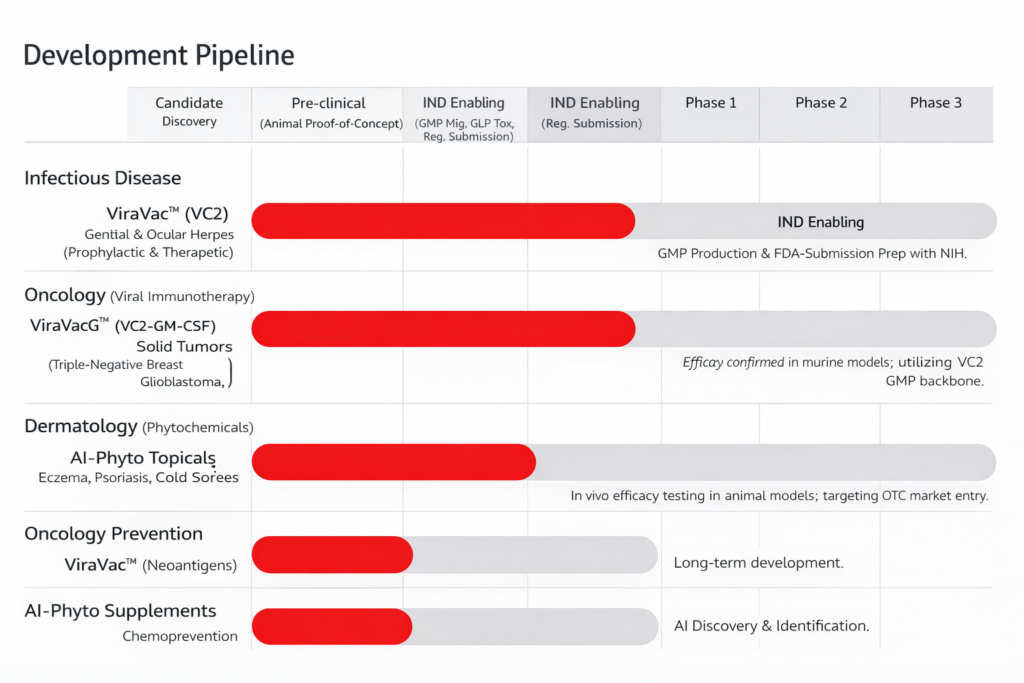
The ViraVac™ platform (scientifically designated as VC2) represents a paradigm shift in live-attenuated viral vaccines. Unlike standard Herpes Simplex Virus type-1 (HSV-1) strains, VC2 has been genetically engineered to eliminate the virus’s ability to hide in the nervous system, resolving the safety concerns that have historically hindered HSV vaccine development.
Mechanism of Action: The gK/UL20 Deletion
The VC2 virus features specific deletions in the amino termini of glycoprotein K (gK) and the membrane protein UL20. These specific viral proteins are essential for the virus to enter neuronal axons and travel to the ganglia.
Preventing Latency: Because of these engineered mutations, ViraVac™ cannot infect neurons or establish latency, effectively eliminating the risk of viral reactivation or safety issues associated with neurovirulence.
Robust Immunogenicity: Despite being attenuated, the virus replicates efficiently in epithelial cells at the injection site, stimulating a potent, long-lasting immune response (both mucosal and systemic)
Key Advantages
• Superior Safety Profile: Validated in extensive preclinical testing in mice, guinea pigs, and non-human primates.
• High-Yield Manufacturing: The VC2 virus replicates to high titers in cell culture. This solves a major industry bottleneck, allowing for cost-effective, scalable Good Manufacturing Practice (GMP) production compared to competitor vectors.
ONCOLYTIC VIROTHERAPY
Turning “Cold” Tumors “Hot”
Our oncology platform, ViraVacG™, utilizes the VC2 backbone as a delivery vector for cancer immunotherapy. It is engineered to selectively replicate in and destroy tumor cells while sparing healthy tissue.
The GM-CSF Enhancement
ViraVacG™ is modified to constitutively express the cytokine Granulocyte-Macrophage Colony-Stimulating Factor (GM-CSF).
1. Direct Oncolysis: Upon intratumoral injection, the virus infects and lyses (bursts) tumor cells.
2. In Situ Vaccination: The lysis releases tumor-specific antigens into the microenvironment. The presence of GM-CSF recruits dendritic cells and antigen-presenting cells to the site.
3. Systemic Response: This triggers a systemic T-cell mediated immune response, attacking not only the injected tumor but potentially metastatic sites throughout the body.
Therapeutic Targets
Preclinical studies have demonstrated that ViraVacG™ significantly ameliorates metastatic disease and improves survival in challenging tumor models, including:
• Triple-Negative Breast Cancer (4T1 model).
• Glioblastoma.
• Pancreatic Ductal Adenocarcinoma

AI/LLM Phytochemical Discovery
Accelerated Natural Product Innovation
IBG moves beyond traditional “trial and error” drug discovery. We utilize Artificial Intelligence and Large Language Models (LLMs) to identify natural compounds with high therapeutic potential
The Discovery Engine
Our approach leverages advanced computational models, such as Cancer OmicsNet, to predict the therapeutic effects of compounds and kinase inhibitors.
• Data Mining: The AI filters vast datasets of biological interactions to identify phytochemicals that target specific inflammatory pathways or cancer cell signaling.
• Targeted Formulation: We prioritize compounds that show efficacy for specific indications, allowing us to rapidly move from in silico identification to in vivo validation.
Current Applications
• Dermatology Developing topical formulations for conditions like atopic dermatitis, eczema, and psoriasis by targeting inflammation and skin barrier repair.
• Chemoprevention Identifying compounds that can be used as prophylactic supplements to reduce cancer risk.